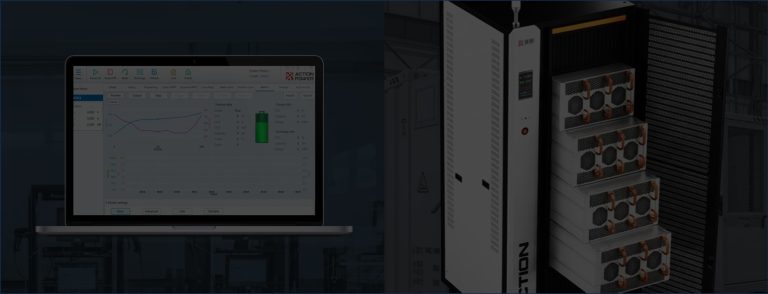
Discover ActionPower's experience in the field of power electronics throughout 30 years of growth and successful track of industrial solutions.

Explore ActionPower's comprehensive range of programmable power and automated testing equipment covering AC/DC, profile emulation and testing sequence automation.

ActionPower combines our advanced programmable power with sophisticated softwares for diverse profile emulation solutions as well as versatile functioning realization.

ActionPower supports technological advancement for our users from various industries with flexible, sophisticated and multi-functional programmable power systems and profile emulation solutions.


Find out the latest innovations from ActionPower
Programmable power technology evolves in pace with the ever-changing applicable regulations and standards in those industries where it is leveraged for boosting the research and development of new prototypes that drive OEM manufacturers ahead in their competition. Setting up, either a simply test bench in a laboratory, or a complex large-scale testing platform, has different focuses and thus different concerns are to bear in mind for evaluating technically the right power options and implementing the correct form of architecture and system.
We share with you in this article from an engineering perspective, together with our industrial experience of power electronics and testing ever since 1996 and acquired through the cooperation with our OEM partners like BYD and General Atomics, comprehensive guidelines for selecting the right form of programmable power system for your testing applications. Should you be interested in applying for more details about ActionPower’s testing solutions, visit our page of programmable power solutions where you will discover ranges of model options.
Rackmount programmable power supplies are modular compact units typically with 1U, 2U or 3U sizes [1], with typical application of being integrated into ATE systems or to be used a standalone unit for either bench setup or rack setup options.

Fig 1. A typical laboratory test bench with a single rack-mount programmable power supply – Credit: ActionPower
Conversion, regulation and controlled programming are typical functions integrated into its own user-interfaces that, whether it is an AC or DC rackmount supply, it is able to convert the AC input from local utility into a regulated DC output with controlled voltage, current and power, while in case of AC output it offers versatile approach to single phase or three-phase control. [2]
Apart from setup a test bench with a single standard unit, the flexibility streamlined with their architecture is the possibility of scaling up to provide, through parallel or series connection, high power by integration into standard racks such as 19U and 45U as specified in IEC 60297 – an international standards elaborated by International Electrotechnical Commission (IEC) – where mechanical dimensions for rack and plug-in units used to mount electronic equipment are officially defined.

Fig 2. Rack-Mount Programmable Power Supplies in ATE system and Standard Rack Installation – Credit: ActionPower
Cabinet programmable power system, or tower-type system which is targeted for higher-power MW application among ActionPower’s portfolios, is rather a system-level power testing platform which integrates power electronics hardware, control plane, sensing architecture, and protection mechanisms within a single coordinate entity or enclosure.

Fig 3. Cabinet and Tower Type Programmable High Power System – Credit: ActionPower
At the hardware level, they are typically built around power stages with coarser power granularity and significantly higher unit power ratings, employing centralized conversion blocks, shared DC-link or AC bus structures, and integrated filtering networks.
Compared to rack-mount solutions that scale output through the parallel aggregation of many fine-grained, lower-power modules, cabinet systems enforce a unified electrical topology with fewer, higher-power conversion stages under centralized control. Therefore and thanks to these features, inter-module (actually inter-cabinet in their context) is reduced with simplified current-sharing dynamics and more deterministic control behaviour including high slew-rate transients and responsiveness.
In the field of power testing, the choice between a rack-mount and a cabinet-type power supply is often perceived as a mechanical or logistical decision – one driven by footprint, installation constraints, or incremental power expansion. However, this is actually a stereotype which is true at low and moderate power level but once it scales up to high power, dynamics and control tolerance applications, form factor evolves from a packaging preference into a system-level architectural decision [4].
The form factor of a test power supply determines its system architecture and dynamic behaviour, not just its physical form. In system-level validation, it defines whether power can be controlled and reproduced with sufficient determinism, making form factor a technical boundary rather than a packaging choice.
Below we break this rough and general definitions into compare-and-contrasts from different concerns and factors.
Parallel expansion seems to be an effective approach to achieving higher power rating though and both rackmount and cabinet system can reach hundreds of kW or even MW setup, as power scales up step by step the system-level behaviour will incrementally by dominated by electrical coherence rather than nominal power rating itself, subsequently demonstrating more functional concerns.

Fig 4. Topology of Rack-Mount Programmable Power in Parallel-Connection – Credit: ActionPower
Rack mount power supplies rely on fine-grained and lower-power modules for composing, for example, a MW platform, where each single unit is with its own control sensing, and protection oops. Therefore, as power rate scales, inter-module interactions through shared impedance, current-sharing mechanisms, and control latency will incrementally overrides system performance and introduce more constraints on transients and control bandwidth, together with disproportionate increases in dynamic complexity. A quick conclusion, building up a MW testing rack with these modular power sources entails more and more complexity and compromised performance along with the scaling power.

Fig 5. Topology of Cabinet Programmable Power from a Single Unit – Credit: ActionPower
Cabinet system, on the contrary, offers high power rating from a single unit and thus rely on fewer module quantities when expanding parallelly for high power platform. To put it alternatively, power stages with cabinet system are with coarser granulity. Thus, interaction paths are minimized, with less stress on active current-sharing algorithms and reduces consistent impedance characteristics across the operating range. Fewer units are parallelled, with reduced control complexity and better system-level performances.
System-level setup with rackmount power supplies usually require external devices for main and branch protection coordination, precharge sequencing, emergency stop logic, inter-device interlocking, and fault selectivity. As they get stacked within a standard rack, it is no longer about the safety and control logic of themselves but the integration quality of the whole system setup and additional customized electrical system.
Cabinet-based systems, nevertheless, treat protection and safety as an intrinsic system property rather than an integration task. By internalizing energy paths, switching behaviour, and protection boundaries within a single validated architecture, the cabinet presents a well-defined electrical interface to both the facility grid and the DUT. The resulting distinction is not functional capability, but responsibility placement: cabinet systems standardize system-level behaviour internally, while rack-mount solutions inherently shift this responsibility to the external integration layer.
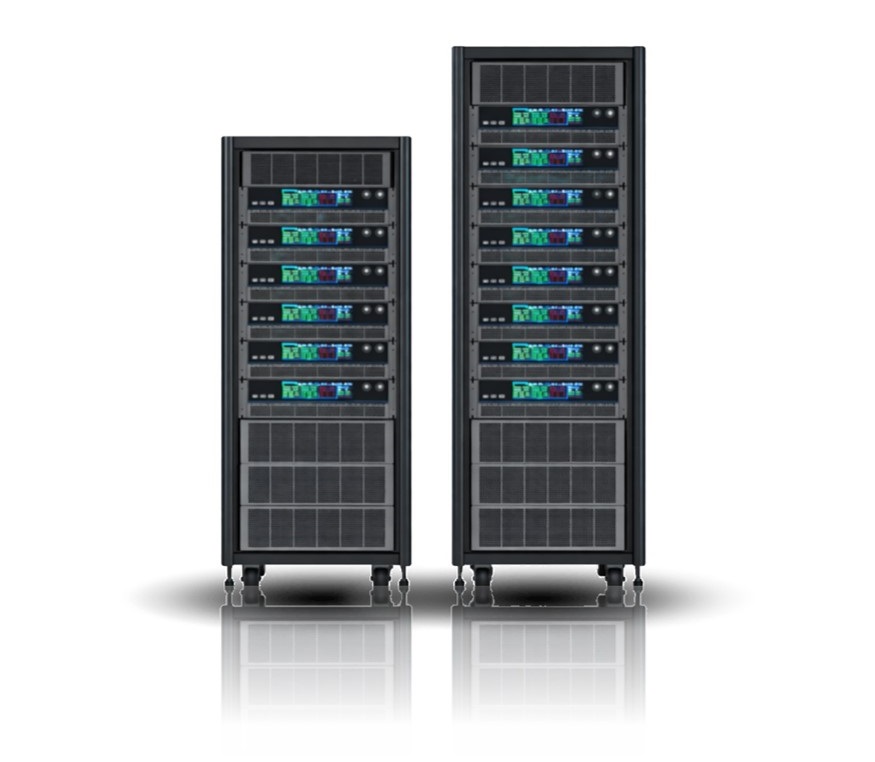
Fig 6. Cortex AC Power Supply in Rack Mount Setup – Credit: ActionPower
Mean Time Between Failure (MTBF) is a key parameter for measuring a system’s reliability and represents the average time a system or device will operate before it fails. [5]
A key advantage of rack-mount modular systems is redundancy: when a module fails, the system can isolate the affected unit and restore operation through replacement with minimal impact on nominal availability and without interrupting the test process. However, as system power scales through the aggregation of an increasing number of modules – each with a finite failure probability – the overall system failure likelihood grows non-linearly. With more parallel units, electrical interconnections, and communication links, system reliability becomes increasingly influenced by cumulative and interaction-driven failure mechanisms rather than by individual module performance alone.
Cabinet-based systems achieve reliability through architectural consolidation rather than replication, concentrating power conversion, control, sensing, and protection within a unified system boundary to minimize parallel interaction points. With fewer high-power conversion units, operating stresses become more uniform and system behaviour more predictable over time, shifting reliability from redundancy-driven maintenance to controlled complexity and lifecycle-oriented system management.
In a short word of conclusion, modular systems manage reliability through redundancy and replaceability, whereas cabinet systems achieve reliability through architectural coherence and long-term predictability.
| Perspective | Rack-Mount Modular Systems | Cabinet-Based Power Systems |
|---|---|---|
| How high power is achieved | High power is built by combining many lower-power modules in parallel. | High power is delivered by fewer, higher-power conversion stages within one system. |
| What scales with power | Module count, interconnections, and coordination effort increase together as power scales. | Power increases with limited growth in overall system complexity. |
| System responsibility | Protection, safety coordination, and stability depend largely on external integration. | System-level behaviour is defined, managed, and validated internally. |
| Reliability approach | Availability is maintained through redundancy and quick module replacement. | Reliability is achieved through architectural simplicity and predictable operation. |
| Long-term system behaviour | System behaviour becomes increasingly interaction-driven as scale increases. | System behaviour remains closer to that of a single coherent power source. |
Let’s save your time with some quick answers now that we have explained to details a lot of technical concerns.:
Whether your testing priorities call for modular flexibility or system-level determinism, ActionPower offers a comprehensive portfolio of programmable power supplies spanning rack-mount and cabinet-based architectures.
Our solutions are designed to support applications from laboratory-scale validation to MW-class system testing, with clearly defined system boundaries, scalable power platforms, and proven engineering reliability. Get in contact and discover how the right architecture can simplify integration, improve test confidence, and align precisely with your testing objectives.

From ActionPower we are open to listening to your suggestions and opinions.
For further media contact or consultation about any topics which might be of your interest about our company, you will be welcomed to send us an email to:
info@actionpowertest.com

Dynamics and power regeneration are no longer compromise to each other. Adopting innovation topology technologies is the PRL DC Load Simulator that accommodates ultra-fast dynamics, regenerative load and high-power scalability from a united single system.

The latest hybrid programmable power supply by ActionPower comes with 6 channels hybrid interface and allows AC/DC module arbitrary combination for flexible testing configuration where both AC and DC are...

Zhiwei Bao holds 20+ patents in the field of mechanical engineering and is keen on industrial automation and product marketing. His interdisciplinary background, along with his passion and initiative for learning, has led him to a profound understanding of power electronics. He manages the technical copywriting for programmable power and testing topics at ActionPower through product-marketing-driven approaches.
About Zhiwei Bao
If you are looking for an automated test system to validate your products during development and research stages to make sure of their successful commercial launch, ACTIONPOWER will be at your disposal to study your specifications and requirements to provided either standard or customized testing solutions.
Specification-matching testing and simulation solutions need discussion of both parties. Actionpower welcomes you inquirt to study together with us about how we can automate your testing processes.
Send InquiryThese are the upcoming events and places you can find ACTIONPOWER and talk with us face-to-face!
Check EventsAccess our Power Supply Wizard to find the right programmable power supply for your use cases and testing scenarios.

Professionalism is what we care about. Why not email us with your technical requirements fully explained rather than submitting a simple message so that we revert more proactively with detailed solutions?