Discover ActionPower's experience in the field of power electronics throughout 30 years of growth and successful track of industrial solutions.

Explore ActionPower's comprehensive range of programmable power and automated testing equipment covering AC/DC, profile emulation and testing sequence automation.

ActionPower combines our advanced programmable power with sophisticated softwares for diverse profile emulation solutions as well as versatile functioning realization.

ActionPower supports technological advancement for our users from various industries with flexible, sophisticated and multi-functional programmable power systems and profile emulation solutions.


Find out the latest innovations from ActionPower
AC (Alternating Current) and in form of three-phase power has been accepted and recognized as a common practice for national grid across all countries worldwide. From devices and appliances that surround our life which rely on either lower voltage AC after regulation or DC after conversion, until those large scale new energy generation systems that interact with the local grid, AC power is indispensable and omnipresent.
Yet before they are formally connected to supply for the purpose of commercial use of serving consumer needs, grid tied devices and equipment are supposed to be verified about their safety, reliability, and stability. That is where a programmable power source may step in, and depending on the complexity and validation targets, either a programmable AC power supply (power source) or grid simulator may apply.

Programmable AC Power Supply vs. Grid Simulator
The article provides insights into the subtle and obscure differences between programmable AC power source and grid simulator, both of which are essential testing equipment for validating your product’s performance and compliances before formal deployment.
A controlled power source of alternating current compared to connecting the tested devices substantially to the supply is rather a more practical for achieving certain compliance validation for reasons that real supply conditions quite more complex with random disturbances. An alternative answer is quite simple: how would a research order the local utility system to intentionally supply an abnormal condition merely for validating his own prototype?
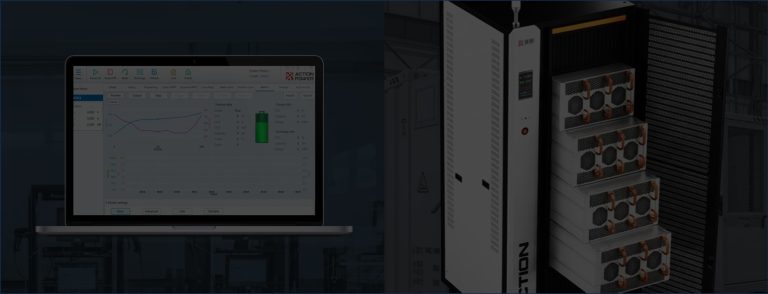
TITAN Regenerative Grid Simulator targets grid-forming and grid-following inverters and PCS testing offering power per unit (cabinet) of 300 kVA to 1MVA level.

A programmable AC power supply or sometimes an AC power source, depending on whether it comes with bidirectional power flow capability, does not only supply the test device with a source of AC power yet offers more control over various parameters and specifications of the supply with regard to voltage, current, and frequency, and further with capability of validating the DUT’s reaction against various user-defined waveforms on the basis of its programmability.
Testing lower and medium power EUTs with regard to their robustness against disturbance with programmable AC source, power ranging from 22 kVA to 220 kVA.

A programmable AC power supply focuses rather more on how the DUT can withstand changing supply specifications while remain safe operation. Generally, a programmable AC power supply would be able to conduct the below user-defined output and configured supply patterns:


Waveform Generation Interfaces with ActonPower’s Grid Simulator and Programmable AC Source
Grid simulators are in nature more advanced programmable AC power supplies yet support more complex functions and testing scenarios where equipment will interact with the DUT by both sourcing and sinking current, working as an electronic load as if it is running in a real grid condition. Typical advanced functions of grid simulators including four-quadrant operation capability, power hardware-in-the-loop option, or to be a regenerative grid simulator combining both features. In nature, and with purpose of validating grid adaptability, it is actually a grid emulation power testing solution combined with both hardware and softwares.
A further advantage of AC grid simulator is the regenerative load capability which fits testing scenarios like for a grid-forming or grid-following inverter which is typically of high power ratings usually of hundreds of kVA or even MVA level. The regenerative function feeds back the energy – through the system’s integrated circuit of converters and inverters – back to grid in a clean form and of low-distortion to both save energy cost and secure utility stability. To be more detail:
Grid simulator in source load is not purely an AC source but, through its sophisticated integrated circuit, regulates the input grid power to the same and converts it into a regulated, controlled, and programmed AC output, which is manipulated by advanced integrated software like host program or the integrated user interface. Key functions include frequency modulation (FM) and amplitude modulation (AM), P\Q\S and power factor settings, volt-var compensation, etc…

Power Hardware-in-the-Loop Topology Example
Moer advanced testing scenarios involve the application of power hardware-in-the-loop technology (Power-Hil) where an additional real-time simulator is integrated in the testing topology to capture signs from the power testing loop and rever it into the control logic and coordinates with a power amplifier for validate the EUT’s performance more realistically.

Testing Topology with Grid Simulator Engaged for Testing Grid-Following PV Inverters
When operating as a dynamic load simulation device, a grid simulator employs a high-precision FPGA-based RLC model to continuously calculate grid impedance and transient responses. By mapping measured voltage and current signals into an equivalent grid impedance model in real time, the simulator accurately reflects variations in grid frequency, phase, and impedance.
While EUT generates power which is fed to the AC load simulator, the system replicates complex conditions like weak grids, non-ideal SCR conditions,, grid environments with complex resonance disturbances, for validating its performance and stability, control-strattegy and logic, as well as for system-level optimization.
Apart from the bidirectional power flow pattern, grid simulators target specific IEEE, IEC, EN regulations and standards verifications for industries like photovoltaics, electric vehicles and BESS. Serving for these purposes, the grid simulators have are developed with more complex functions beyond those standard ones of AC power supply.

IEEE 1547:2018 Standards for Interconnection and Interoperability of DERs
High-end grid simulators come with built-in test scripts aligned with international standards such as IEEE 1547, UL 1741, EN 50530, IEC 61000, and national codes like VDE-AR-N and GB/T. This ensures that renewable energy devices and EV chargers can undergo pre-certification and formal compliance testing in a controlled environment.
Grid simulator is capable of adjusting each of the power system’s 3 phase separately and independently to actively emulate conditions of phase unbalance. As a result of phase unbalance, the power system suffers from unstable RMS value that will cause increased heating, reduced equipment efficiency, and premature failure.

Grid simulator actively and independently controls each phase of the 3Ph power system
A grid simulator can reproduce a wide range of real-world disturbances such as low-voltage ride-through (LVRT), high-voltage ride-through (HVRT), frequency drift, and phase jumps. These tests ensure that grid-tied devices like PV inverters and storage converters remain stable and compliant under abnormal grid conditions. Displayed below are waveforms generated by grid simulator where phases among the power systems are either individually or compoundedly programmed with distortion and transient voltage amplitude changes.


LVRT & HVRT Waveforms Generated by ActionPower’s Grid Simulators
Inter-harmonics are more complex than harmonics that lead to severe repercussions among the power system and affect performance of the tied devices and equipment. High-Power Grid Simulator such as TITAN Series supports precise synthesis of harmonic and non-integer inter-harmonic frequencies, with controllable amplitude and phase, thus to validate device’s immunity in accordance with IEC 61000-4-13 and related power quality standards.
Grid-forming (GFM) inverters are becoming the most critical components at the Point of Common Coupling (PCC) for DERs. As highlighted in evolving standards such as IEEE 1547 and UL 1741, modern renewable networks have transitioned from simple one-way power flows to complex systems requiring seamless interoperability between the DER and the utility grid.
To meet these requirements, power testing applications now utilize grid simulators capable of Power Hardware-in-the-Loop (PHIL) integration. In this scenario, the dynamic responses from the Equipment Under Test (EUT) are fed back into a real-time simulation loop. This allows the emulation system to generate dynamic grid conditions in response to the EUT’s behaviour, effectively validating its stability and interoperability under “live” conditions.

Grid Simulator with PHIL Application
| Type | Core Purpose | Voltage / Frequency Control | Waveform Output | Harmonics & Inter-Harmonics | Phase Control | Standards Compliance |
|---|---|---|---|---|---|---|
| Programmable AC Power Supply | Provides a stable and adjustable AC source for general device testing | Programmable (10 Hz – 1 kHz, some up to several kHz) | Sine wave plus optional square, triangle, or custom waveforms | Basic harmonic injection (integer multiples only) | Limited phase angle adjustment | Typically used for in-house R&D, not for compliance certification |
| Grid Simulator | Reproduces real grid conditions for grid-tied equipment testing | Programmable with dynamic event reproduction | Full waveform synthesis: distorted, unbalanced, transient | Advanced harmonic and inter-harmonic injection (precise amplitude/phase control) | Independent phase control for unbalance and asymmetry | Supports IEEE 1547, UL 1741, EN 50530, IEC 61000, VDE, GB/T |
ActionPower‘s category of testing equipment and programmable power supplies cover a range of options with different designs and architectures for either grid related testing or applications where the validation only requires a programmable AC source. The advanced dynamics and responses of ActionPower’s grid simulator and AC power supplies are further supported by intelligent and smart software with simple and intelligible user interaction to streamline your testing applications.
Our expertise in grid compatibility testing applications is also remarked by our unique high-power cabinet (tower-type) systems which are ideally for megawatt and mega volt-ampere testing scenarios, especially for renewable energy systems. You may also find clients who trust our MW and MVA testing grid simulators by references page.

ActionPower’s team of experienced power electronics engineers are ready to solve your testing requirements
To discover more options among our portfolio, you may either visit our page of power supply selector where you can find the right model based on the specifications of your project or get in contact with our sales team for support.

From ActionPower we are open to listening to your suggestions and opinions.
For further media contact or consultation about any topics which might be of your interest about our company, you will be welcomed to send us an email to:
info@actionpowertest.com

Dynamics and power regeneration are no longer compromise to each other. Adopting innovation topology technologies is the PRL DC Load Simulator that accommodates ultra-fast dynamics, regenerative load and high-power scalability from a united single system.

The latest hybrid programmable power supply by ActionPower comes with 6 channels hybrid interface and allows AC/DC module arbitrary combination for flexible testing configuration where both AC and DC are...

Zhiwei Bao holds 20+ patents in the field of mechanical engineering and is keen on industrial automation and product marketing. His interdisciplinary background, along with his passion and initiative for learning, has led him to a profound understanding of power electronics. He manages the technical copywriting for programmable power and testing topics at ActionPower through product-marketing-driven approaches.
About Zhiwei Bao
If you are looking for an automated test system to validate your products during development and research stages to make sure of their successful commercial launch, ACTIONPOWER will be at your disposal to study your specifications and requirements to provided either standard or customized testing solutions.
Specification-matching testing and simulation solutions need discussion of both parties. Actionpower welcomes you inquirt to study together with us about how we can automate your testing processes.
Send InquiryThese are the upcoming events and places you can find ACTIONPOWER and talk with us face-to-face!
Check EventsAccess our Power Supply Wizard to find the right programmable power supply for your use cases and testing scenarios.

Professionalism is what we care about. Why not email us with your technical requirements fully explained rather than submitting a simple message so that we revert more proactively with detailed solutions?