Discover ActionPower's experience in the field of power electronics throughout 30 years of growth and successful track of industrial solutions.

Explore ActionPower's comprehensive range of programmable power and automated testing equipment covering AC/DC, profile emulation and testing sequence automation.

ActionPower combines our advanced programmable power with sophisticated softwares for diverse profile emulation solutions as well as versatile functioning realization.

ActionPower supports technological advancement for our users from various industries with flexible, sophisticated and multi-functional programmable power systems and profile emulation solutions.


Find out the latest innovations from ActionPower
Batteries are omnipresent in both the industrial world and among consumer electronics, operating in well-tuned harmonization with an array of devices and components under different contexts. For instance, a battery, while monitored by a management system or say BMS on an EV, works as the source for fundamentally all the onboard electronic devices. Then as when the battery is the load that sinks power and gets charged, its operation and charging status should be well coordinated with and by the charger to ensure safety and interoperability.
The underlying concern is, since battery tends to work in a dynamic status, how do these devices ensure their interoperability and consistency with the former while avoiding technical issues and guaranteeing safety and consistency? And of course, the answer would be connecting them with a substantial real battery against whose shifting and complex behaviours these devices’ validation can be conducted. However, is this suggestion something realistic and practical in nature?
Power electronics technologies, thanks to their evolution, have provided an outlet for this concern and what engineers can resort to, which is the battery simulator. In this article written by ActionPower, we will cover what a battery simulator is and the technical fundamentals about this versatile power testing instrument.
A real battery features the bidirectionality that it can both source power for a range of devices, such as complex systems like a whole e-mobility system, or as simple as for a portable consumer device. When the battery works as a load, the battery stores power generated and transmitted to it, such as from solar energy systems and EV charging stations.

Fig 1. Battery Operation Anatomy and Devices Interoperate when Charging and Discharging
Below is a summary of a battery’s dynamic and transient operation during charging and discharging processes:
To conclude further from a technical perspective, the battery’s operation is featured by the following patterns:

Fig 2. Summary of Shifting and Dynamic Battery Characteristics during Operation
With the above features and characteristics of a battery in operation discussed, we can spot the underlying challenges if a real battery is implemented for validating and testing battery-tied equipment and devices.
In the first place, the concern is about repeatability. A test bench presumably set up with a real battery cannot reliably reproduce across test cycles the same SoC, temperature, ageing, and usage history. A further challenge is that, due to the complex internal dynamics, it is technically impossible to have a specific fact isolated or independently controlled.
Cost constraints and safety place more limits on test coverage. Assuming that a test bench with a real battery is set up, all testing and validation activities including high-power transients, fault injection, abnormal charging profiles, inevitably accelerate the battery’s ageing and degradation and will eventually hit its end of lifecycle and call for costly replacement, meanwhile posing significant safety risks against these stresses.
While the above explanations seem quite subtle for understanding why it is impractical to use a real battery for testing applications, let’s alternatively discuss this option as if in real testing scenarios as per application regulations and standards.
In OBC validation testing, standards such as IEC 61851-1 and ISO 21498-2 require charging to be evaluated under repeatable DC-side conditions, typically with output voltages of 250–450 V, defined charging currents (e.g., 32–80 A), and controlled CC–CV transitions, repeated across identical test cycles.
When a real battery pack is used, each cycle changes its state of charge, temperature, and internal resistance, leading to drift in voltage rise and CV transition behaviour. As a result, the DC-side parameters specified by the standards cannot be reproduced consistently, making real batteries unreliable for repeatable OBC testing.
Battery simulators are programmable power equipment that, yet in nature, combine hardware and software, with bidirectional operation capability and replicate the characteristics of a real battery under charging and discharging status. Meanwhile, they offer more flexible and powerful control methods for voluntarily and isolatedly setting up various parameters of a battery, which are interwoven with each other on a real one.

Fig 3. Battery Emulation Software and Setting Interfaces of Action 2020
The principle of battery simulator’s operation resembles a combination of a programmable DC power source and an electronic load. Nevertheless, battery simulator operates as a single platform where the behavior and electrical relations between current, voltage, and impedance are coupled with further advanced electromechanical settings like battery models and internal resistance are available for emulating intrinsic batteries in a unified control method. These features are something not available if a test bench is set up with the combination of source and load as separate testing instruments along the topology.
In the previous context, we have discussed those drawbacks and downsides of, supposing it can be really implemented and set up within the environment, testing with a real battery. By contrast, engineers can have their minds at ease on that front when conducting testing applications with a battery simulator. Handling correspondingly those concerns, including cost, safety, controllability, and repetitiveness, a battery simulator offers the following technical advantages:
Battery simulators enable continuous testing without consumable energy storage elements, reducing operational overhead while supporting long-duration, high-cycle, and stress-oriented test programs.
Advanced options such as the TITAN Series Battery Simulator Power Supply (previously ABS) further allow scalability for reaching even 10 MW power levels, meanwhile uncompromising inter-system communication and operation dynamics with advanced power electronics technologies. Users do not have to replace the whole system as with old-school power testing equipment, which is unscalable and requires a repurchase in case required specifications scale up.

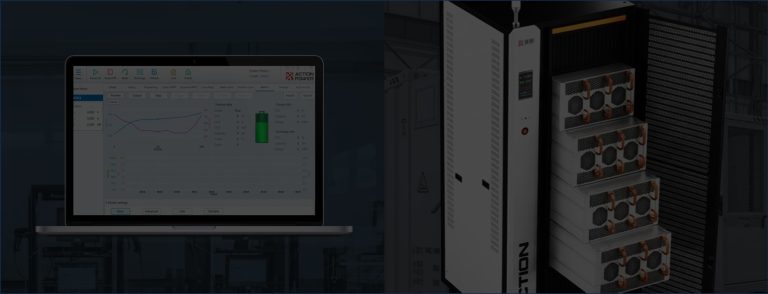
Fig 4. TITAN Battery Simulator Power Supply and Emulation Software by ActionPower
Battery simulators offer software-defined control over both electrical and behavioural battery characteristics, enabling test conditions to be configured with high precision and adjusted instantly as test objectives evolve.
Beyond basic voltage and current limits, battery behaviour can be shaped through parameterized models that describe how the terminal voltage responds to state of charge (SoC), internal resistance, load current, and dynamic operating conditions. Charging and discharging processes, including CC–CV transitions, current ramping, and operational boundaries, are fully deterministic, allowing complex test scenarios to be executed in a controlled and repeatable manner across a wide range of applications.

Fig 5. ActionPower’s Battery Simulator Offers Various Electrochemical Battery Profile Settings and Emulation
Battery simulators reproduce identical electrical conditions across repeated test runs. Defined parameters and dynamic behaviours remain stable over time, ensuring consistent results for regression testing, comparative evaluation, and standards-based validation.
Designed with high-bandwidth control loops, battery simulators accurately reproduce fast electrical transients such as load steps, regenerative power flow, voltage sag, and recovery dynamics, which are critical for validating modern power electronic systems.
Battery simulators support controlled injection of abnormal states, including voltage excursions, current limits, and dynamic disturbances, enabling comprehensive test coverage without compromising system safety or test continuity.
Battery simulators have their places across industrial compliance validations ranging from low-power testing scenarios, such as for consumer devices, up to megawatt high power contexts, including for data centers and battery energy storage systems (BESS) where a converter or PCS has to be validated.
Testing environment setup with new energy vehicles expects a dynamic power control with transient responsiveness as if it is a vehicle in real driving status where speed constantly shifts with regenerative braking taking place in between sporadically and consecutively. Transient CC-CV charging profiles, bidirectional power flow for regenerative scenarios, programmed impedance, and realist voltage sags under load changes are all covered by batter simulators for testing engineers’ convenience to replicate real-world conditions.

Fig 6. Read ActionPower’s Application Note about EV Charging and Testing Applications
For BESS and PCS (Power Conversion System) validation, battery simulators provide a compliance-friendly way to test high-power bidirectional operation, grid-support modes, and protection coordination under controlled DC conditions. They enable stable emulation of battery-side behaviour while supporting long-duration cycling and abnormal-condition verification.
In AI data centers, battery simulators support safety-compliant validation of high-power DC architectures such as UPS, battery backup systems, DC bus converters, and energy storage interfaces. They enable controlled testing of ride-through events, load transients, and protection behaviours under repeatable conditions aligned with reliability and safety requirements.
We appreciate your attention to this article where we covered thoroughly the advantages and applications of battery simulators as well as their role in improving and proving a product’s robustness and reliability against emulated transient operation and fault conditions.
ActionPower’s portfolio of battery emulation hardware and software supports both consumer-level power testing and large-scale system validation, spanning DC power ratings from 15 kW to 10 MW. These solutions are available in multiple structural and architectural configurations, including rack-mounted modular platforms and high-power cabinet-based systems, to accommodate diverse testing requirements.
You may contact us for expert suggestions about selecting the right model or explore with our power supply wizard for identifying the correct model option, filtering by current, voltage, and power ratings.

From ActionPower we are open to listening to your suggestions and opinions.
For further media contact or consultation about any topics which might be of your interest about our company, you will be welcomed to send us an email to:
info@actionpowertest.com

Dynamics and power regeneration are no longer compromise to each other. Adopting innovation topology technologies is the PRL DC Load Simulator that accommodates ultra-fast dynamics, regenerative load and high-power scalability from a united single system.

The latest hybrid programmable power supply by ActionPower comes with 6 channels hybrid interface and allows AC/DC module arbitrary combination for flexible testing configuration where both AC and DC are...

Zhiwei Bao holds 20+ patents in the field of mechanical engineering and is keen on industrial automation and product marketing. His interdisciplinary background, along with his passion and initiative for learning, has led him to a profound understanding of power electronics. He manages the technical copywriting for programmable power and testing topics at ActionPower through product-marketing-driven approaches.
About Zhiwei Bao
If you are looking for an automated test system to validate your products during development and research stages to make sure of their successful commercial launch, ACTIONPOWER will be at your disposal to study your specifications and requirements to provided either standard or customized testing solutions.
Specification-matching testing and simulation solutions need discussion of both parties. Actionpower welcomes you inquirt to study together with us about how we can automate your testing processes.
Send InquiryThese are the upcoming events and places you can find ACTIONPOWER and talk with us face-to-face!
Check EventsAccess our Power Supply Wizard to find the right programmable power supply for your use cases and testing scenarios.

Professionalism is what we care about. Why not email us with your technical requirements fully explained rather than submitting a simple message so that we revert more proactively with detailed solutions?